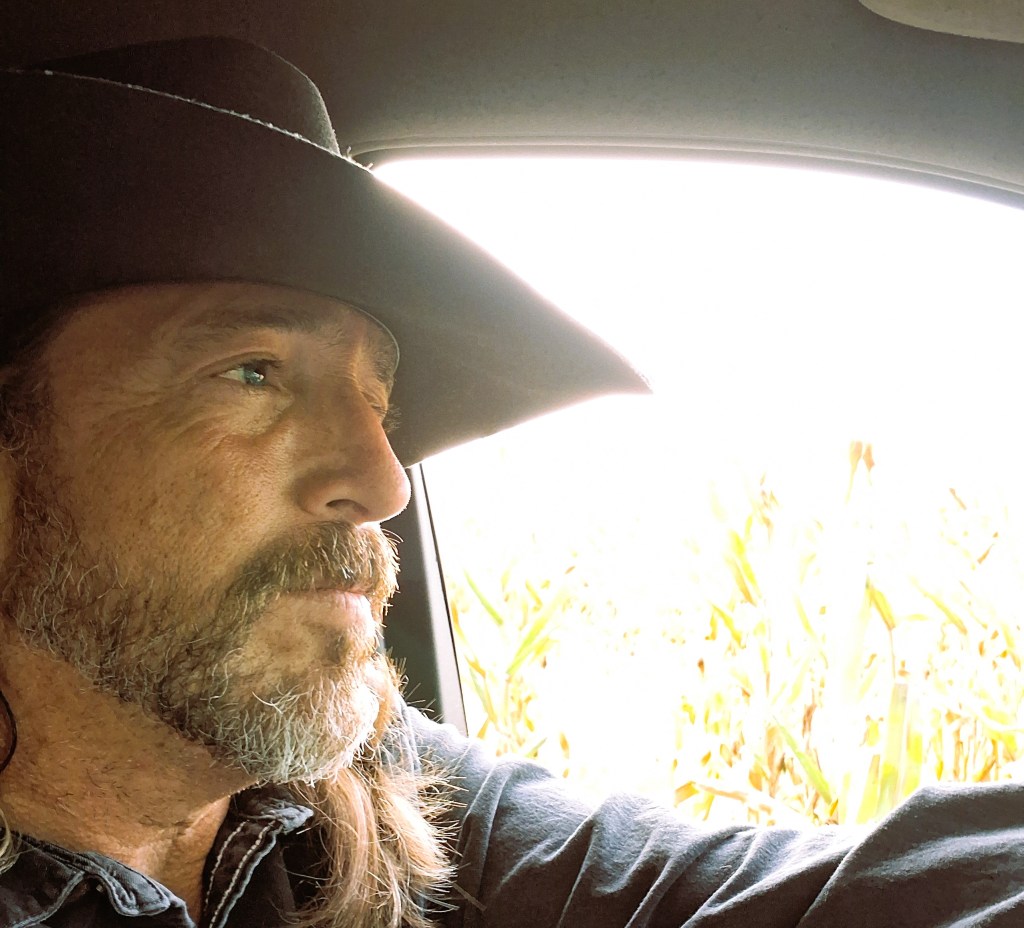
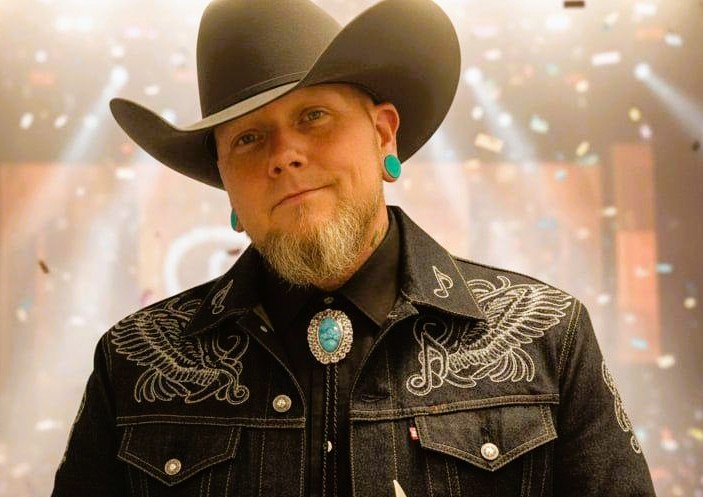
Michael “Doc” Studard is a Southern storyteller, radio host, and frontman for the Americana rock band Stateline Saints. As the voice behind Mornings with Doc on Kickin Kountry 101, he brings humor, honesty, and heart to the airwaves—mixing interviews with rising country artists, music reviews, and stories from life below the Mason-Dixon line.
A lifelong writer and musician, Doc’s work blends grit and soul, covering everything from outlaw country to Southern rock legends and today’s independent trailblazers. He’s passionate about giving new artists a real platform and keeping authentic country music alive on the air and online.
When he’s not behind the mic or writing about music, Doc’s probably with his wife Leafy and their pack of rescue dogs somewhere in North Mississippi—proof that love, loyalty, and a good story never go out of style.
Some artists chase the spotlight early. Others live a full life first — and that’s exactly why their music hits harder.
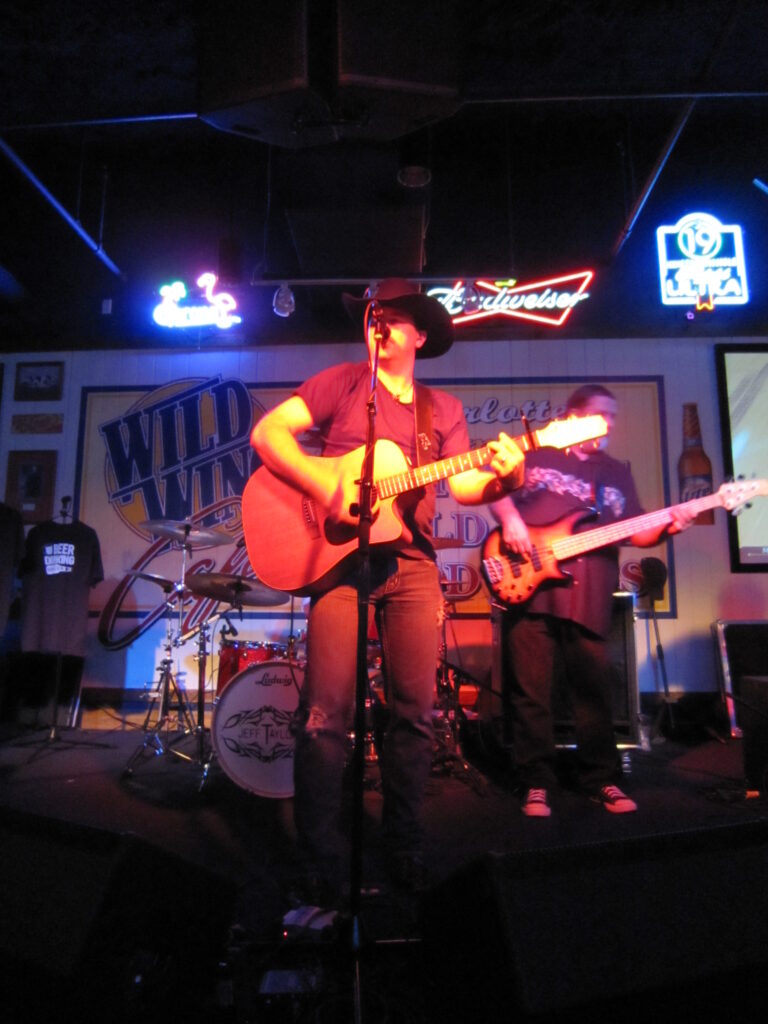
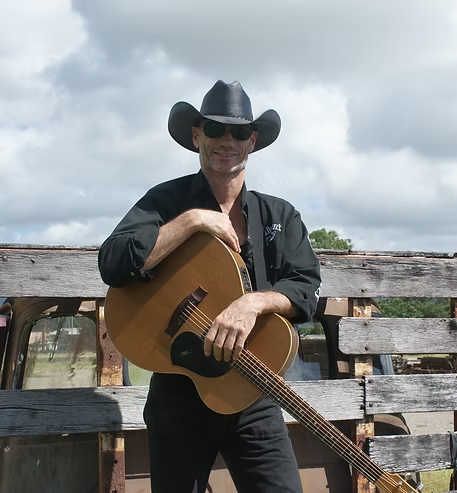
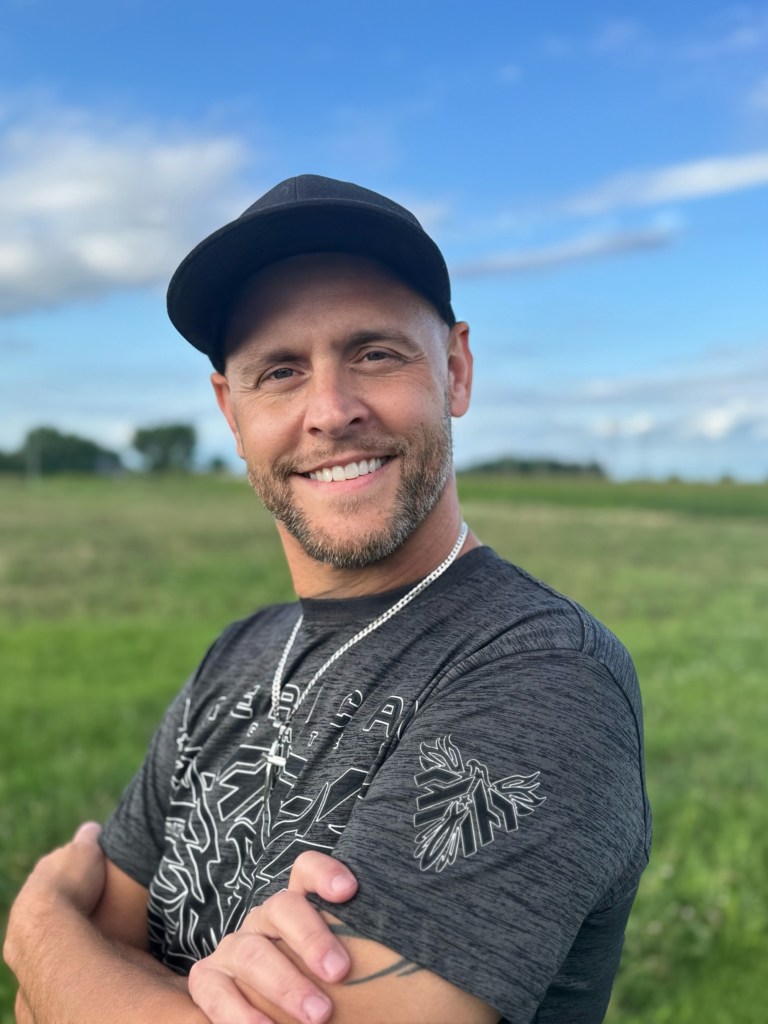
Jeff Taylor, this week’s Indie Spotlight Artist on Kickin Kountry 101, is the latter. A lifelong musician, tech professional, and father, Jeff is stepping back into music in 2025 with something many artists don’t have: perspective.
And you can hear it in every note.
From Drums at Five to Guitar in Middle School
Jeff’s musical journey started almost as early as it gets.
“I got my first drum set when I was five,” Jeff says. “My uncle played drums in a band in the ’80s, and music was always around in my family.”
Drums came first. Guitar followed in middle school, when Jeff’s musical influences began colliding — ’70s rock and country from his dad, Motown and R&B from his mom, and a growing love for guitar-driven music.
The first song he learned to play and sing?
“Every Rose Has Its Thorn by Poison.”
A rite of passage for guitar players everywhere.
The Song That Pulled Him Into Country Music
While rock shaped Jeff’s early years, it was country music that pulled him in for good.
“The first country song I played and sang was Much Too Young (To Feel This Damn Old) by Garth Brooks,” Jeff says. “Even as a teenager, that song hit me. Now that I’m 50, it hits even harder.”
For Jeff, country music was about the storytelling.
“The lyrics. The heart. The way the songs make you feel something — that’s what drew me in.”
Music Was Never the Plan — Until It Was
Jeff never set out to make music his career.
“I always did it for me,” he explains. “It was my outlet.”
That changed around 2009–2010 after a personal turning point — and an unexpected call from NBC casting agents for The Voice. While that chapter didn’t lead to TV stardom, it opened doors.
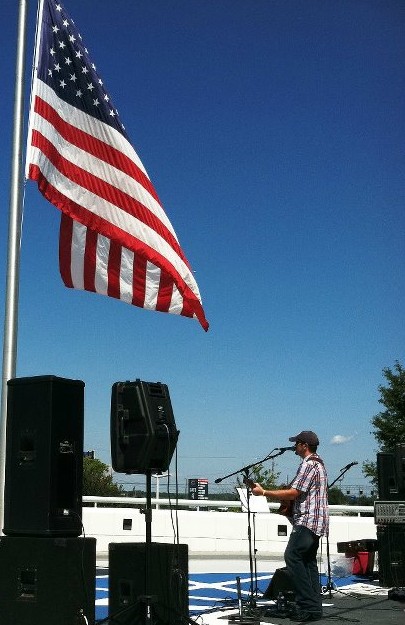
Jeff formed a band, played festivals and NASCAR events, and spent several years performing live before stepping away again to focus on raising his daughters.
A Tech Career That Quietly Shaped His Sound
Before returning to music, Jeff built a successful career in technology — completely self-taught.
“In the ’90s, it was books and trial-and-error,” he says. “The internet wasn’t what it is now.”
Ironically, those skills now translate directly into modern music production, where technology and creativity are inseparable.
AI, Authenticity, and Real Music
When asked about AI in music, Jeff offers a thoughtful, grounded take.
“I won’t use AI to write or create my music,” he says. “That’s a personal choice.”
But he doesn’t see it as a threat.
“We’ve seen this before — overly synthetic eras always lead to a pushback. People eventually want real music by real musicians again.”
And AI can’t replace one critical thing:
“Human connection. It can’t get on stage. It can’t connect the way people do.”
Why 2025 Was the Right Time
Jeff’s return to music came with a realization.
“I turned 50 in 2025. I’m an empty nester now,” he says. “Life doesn’t end just because your kids grow up.”
His goal isn’t fame — it’s fulfillment.
“I want to inspire people to chase what they love. We get one life, and it goes by fast.”
Indie Artists Need Each Other
One thing that sets Jeff apart is his genuine support of other independent artists.
“When you’re competing against major labels with massive budgets, indie artists have to support each other,” he explains. “Sharing fans and lifting each other up is how we grow.”
It’s a mindset that fits perfectly with the heart of independent country music.
What’s Next for Jeff Taylor
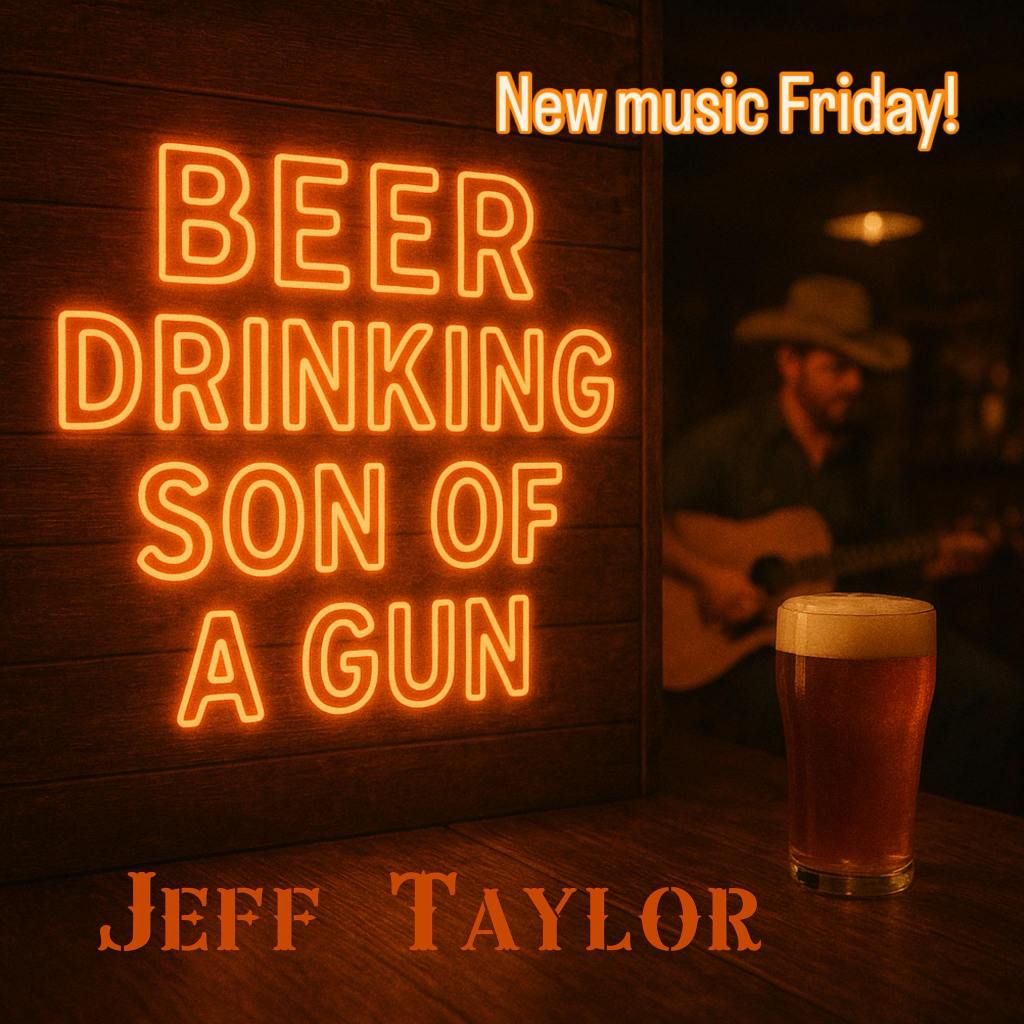
Jeff’s current single, “Beer Drinking Son of a Gun,” is playing all week on Kickin Kountry 101 as part of his Indie Spotlight feature.
He plans to release six new singles in a “waterfall” rollout through 2026, dropping a new song every two to three months.
The next release, “Honky Tonk Angel,” is set for late January and leans heavily into classic ’90s country storytelling.
Why Jeff Taylor Matters
Jeff Taylor isn’t chasing trends or shortcuts. He’s making real music, rooted in experience, honesty, and heart.
And sometimes, that’s exactly what country music needs.
Canada to Australia to Nashville — and Why “Rockin’ Christmas” Might Be His Most Personal Release Yet
By Michael “Doc” Studard
When you hear Robert Ross, you hear grit, gravel, heart, and a world of miles behind the microphone. But what you might not know is just how many actual miles — and continents — it took for Ross to land in Nashville and become one of country music’s most compelling new voices.
Ross didn’t just drift into Music City. He arrived as the 2025 Red Carpet Awards Europe – Male Artist of the Year, the 2024 Independent Music Network Awards – New Discovery Artist of the Year, and a man who has lived enough for three lifetimes — soldier, laborer, business owner, traveler, and storyteller.
But before the accolades, before the stages, there was a small fishing town, a snow-covered runway, and a dream that refused to die.
From Minus 15 to 98 Degrees: The Day Everything Changed
Ross grew up in rural New Brunswick — a town so small he jokes it had “95 people on a good day.” Life there wasn’t easy. Work was limited, booze and drugs were common escapes, and the options for a young kid with ambition were slim.
“I knew from a very young age I had to leave,” he told me. “I wouldn’t trade my childhood, but I didn’t want to be a fisherman, didn’t want to work in the woods, and I definitely didn’t want the pulp mill.”
So he did what many kids from small towns do when they want out: he joined the military. It took him around the world, then back home, then back into service again. But the moment that would alter the course of his entire life came years later — on a frigid day in Edmonton, Alberta.
Ross boarded a plane in the middle of a blizzard. “It was blowing a gale, minus 10 to minus 15. We didn’t even know if we were getting off the ground.” Hours later, the doors opened in Australia.
“It was 98 degrees and sunny. I threw on shorts and running shoes, went for a six-mile run, and said, ‘I am home.’”
He wouldn’t see snow again for 15 years.
A Life Too Big for One Career
The funny thing about Ross’s story is that music was always there — but life kept getting in the way.
“Life has always gotten in the way of my music,” Ross said. “The money’s not rolling in all the time, so you do whatever jobs you have to.”
And did he ever.
Ross was:
A soldier (twice)
A truck driver
A heavy-equipment operator
A renovation business owner
A dental assistant
An oil and gas worker
A massage therapist with a decade-long successful practice
It reads like a list of characters from a novel. But each job, each city, each setback brought him closer to where he’s supposed to be.
Music never left. It just waited patiently.
Going All-In… and Then the World Shut Down
Just before the pandemic, Ross finally did what friends had been urging him to do for years — he committed to music full time.
Nine months later: COVID.
“I always tell people: life happens while you’re busy making other plans,” he laughed.
But Ross was living in Cairns, Australia, a place that became one of the most unique COVID bubbles on earth. Queensland sealed itself off from the world — then from the rest of Australia — and Cairns became a bubble within a bubble.
“In that whole period, Cairns had about 50 cases total. No deaths. Life went on as normal for two and a half years.”
Bars stayed open, people hugged, shook hands, danced, and Ross kept performing. The world shut down, but his momentum didn’t.
When the borders finally reopened, COVID cases spiked to thousands within a week — proof of how isolated they’d been.
By then, Ross knew:
It was time for Nashville.
The Long Road to Music City
Getting to the capital of country music wasn’t as simple as booking a flight.
Ross, a dual citizen of Canada and Australia, had to earn an O-1 “Extraordinary Talent” Artist Visa — a process that required 137 pages of proof, awards, press, interviews, and verification that he was not only established, but would contribute to the American arts landscape.
“It’s flattering to hear ‘extraordinary talent,’” he joked, “but they don’t exactly just hand it to you.”
It took time. Money. Patience. Documentation. More documentation.
But finally, the visa was approved.
In October of 2023, Ross arrived in Nashville — just in time for a brutal winter storm that dropped eight inches of snow and froze the city solid.
“Cousin told me, ‘Winters aren’t bad. You might get a skiff of snow.’ That snow stayed for ten days,” he laughed. “Welcome to Tennessee.”
Despite the shock, he knew he was home.
Roots, Revival, and Real Country Music
Ross is passionate when he talks about the state of country music.
“Since the early 2000s, country took a sharp turn away from its roots,” he said. “Thank God it’s coming back now. You’ve got artists like Cody Johnson bringing real country back.”
His influences were the classics: Johnny Cash, Merle Haggard, Hank Williams, Charley Pride, and Canadian icon Stompin’ Tom Connors.
“I cut my teeth on those songs. That’s the music that raised me.”
On AI, Fear, and the Future
When the conversation shifted to AI, Ross didn’t shy away from honesty.
“It scares me,” he admitted. “There’s a lot of good that can come from it and a lot of bad.”
His wife recently completed a major AI program with Tony Robbins, pushing them to understand the technology instead of fear it.
“Don’t be afraid of it — embrace it,” Ross said. “But I still don’t like the bad it can do.”
He’s not alone. Artists everywhere are navigating this new frontier.
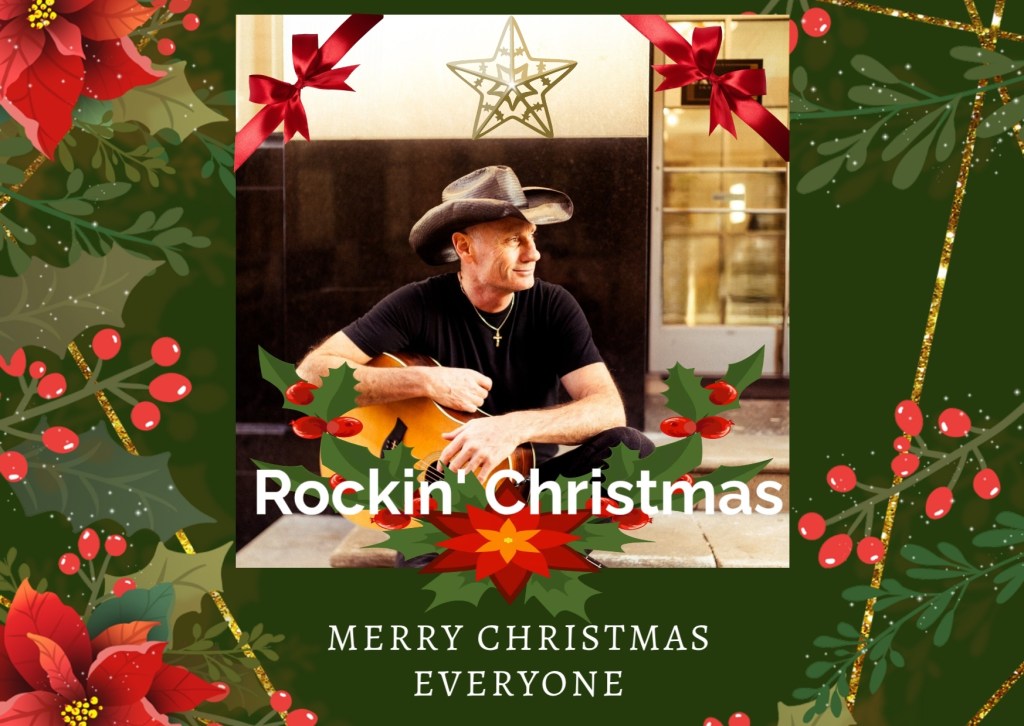
“Rockin’ Christmas” — A Holiday Track with Heart
Ross’s newest single, “Rockin’ Christmas,” is more than just a seasonal release — it’s a celebration of the journey that brought him here.
Santa with swagger, guitars with bite, and a voice shaped by snowstorms, desert heat, diesel smoke, and honky-tonks half a world apart.
After everything he’s lived — from tiny-town New Brunswick to the outback of Australia to the neon glow of Lower Broadway — Ross delivers Christmas spirit with world-traveled soul.
It’s festive. It’s fun. It’s Ross to the core.
The Final Word
Robert Ross is not your average artist. He’s lived three different lives before most of us finish one. He’s driven trucks, fought for his country, built houses, healed bodies, and now he heals hearts with country music.
But more than that — he’s proof that it’s never too late to chase the dream that’s been tugging at your soul since childhood.
“Music has always been in my life,” he told me. “Always. Nothing is getting in the way now.”
When you talk to David Veteto — the mind, heart, and gravel-voiced soul behind Creekbed Saints — you’re not talking to a guy who chased fame his whole life. You’re talking to a man who ran from the spotlight, hid in the bathroom to sing karaoke so nobody could see him, and only found the courage to make music when life forced him to.
And yet, out of heartbreak, addiction, trauma, and a poet’s stubborn need to turn pain into story, David has carved out something rare: raw, lived-in, honest Southern songwriting.
“I’ve been rhyming words since I was ten,” he tells me. “I always loved poetry. But I didn’t know how to turn poems into songs. My dad kept pushing me — ‘You gotta do it, son.’ And when he died… well, finishing that first song was the only thing I knew to do for him.” creekbed_76380d4aadc749dca3a994…
What comes after that first finished song is where the Creekbed Saints story really begins.
From Arkansas Dirt Roads to a Mic at Home: A Southern Upbringing
David grew up in northeast Arkansas, in a town where Memphis might as well have been New York City.
“Memphis was huge to us. If you were going there, it was because you had to — like to see a specialist doctor,” he laughs. “My hometown had 30,000 people when I was growing up. Now it’s like 80 or 90,000. That still ain’t Memphis.” creekbed_76380d4aadc749dca3a994…
He remembers cassettes, fast-forwarding, flipping tapes, and the thrill of discovering country songs that didn’t get played on the radio. John Conlee’s deep cuts. George Jones. Tanya Tucker. Then later, the 90s boom: Tracy Lawrence, Randy Travis, early Tim McGraw.
Those voices shaped him.
The other thing that shaped him? Fear.
“I’ve been on stage twice in my entire life. Both times scared me out of my mind. I changed my college major because I couldn’t stand being in front of a class,” he admits. creekbed_76380d4aadc749dca3a994…
So David did what modern indie artists do: He bought the equipment. He stayed home. He hit record.
And thus, Creekbed Saints was born not with a spotlight — but with survival.
The Death That Broke Him… and the Stranger Who Called Him Out
When David’s father passed away, everything fell apart.
“I went from beer a couple nights a week to whiskey every night. Ended up in a motel room. Ended up on the floor. Ended up in the ER. They told me my kidney and liver looked good — and my first thought was, ‘Cool, I can keep drinking.’ That’s how bad it was,” he says. “And I was married. I had kids.” creekbed_76380d4aadc749dca3a994…
But the turning point wasn’t the ER. It wasn’t the family. It wasn’t a church. It wasn’t friends.
It was a customer from the skating rink he owned. Someone who barely knew him… but had noticed he’d lied about quitting.
“She said, ‘You told me you quit drinking. But I saw the beer in your hand on poker night. I smelled it on your breath at work.’ She called me out. And lying to a stranger like that hit me harder than any bad thing I ever did drunk,” David says. “That’s when I knew — I gotta quit.” creekbed_76380d4aadc749dca3a994…
Sobriety didn’t happen all at once. But the writing did.
He didn’t find God right away. But he did find lyrics.
“I’d write a line like ‘Maybe it’s dirty floors where I get clean’ and think, okay… that’s something. That’s a story,” he says. “Addict Just Like Me — that one came right out of that place I was in.” creekbed_76380d4aadc749dca3a994…
His dad used to say, “Son, I’ll be your cheerleader. I can’t help you, but I can cheer you on.”
And after he passed, David says, “Writing became the only way I could still hear him.” creekbed_76380d4aadc749dca3a994…
Faith, Frustration, and the God Song He Didn’t Mean to Write
Even before he got sober, David had the sense God was tugging at him — even if it annoyed him.
“I’d hear people saying, ‘I prayed and God took the addiction away instantly.’ And I’d be like, well great — why won’t He take mine? I was praying and crying every day and still struggling. I got angry at God. That’s why I couldn’t hear Him,” David explains. creekbed_76380d4aadc749dca3a994…
But then something weird happened.
He started writing songs that felt like prayers… even though he didn’t mean them to be.
“I wrote this angry breakup song — full of resentment, full of everything I wanted to say to people who hurt me,” he says. “I went to sleep, woke up the next day, read it again… and somehow I’d rewritten it into a gospel song. Same lyrics, same structure, but now it was about losing myself and needing God to pull me through.” creekbed_76380d4aadc749dca3a994…
That song? The Only Heart I Ever Lost and Needed Back Was Mine.
“That one felt like it didn’t even come from me,” he says quietly. “I think God wrote it for me because I was writing it drunk.” creekbed_76380d4aadc749dca3a994…
Creekbed Saints: A Name, A Song, and a Whole World
The song Creek Bed Saints wasn’t a poem. It wasn’t years old. It wasn’t something tucked away in a notebook.
It arrived, fully formed, when the title popped into his head.
“I thought, ‘Well hell, if the band is Creekbed Saints, I need a song named Creekbed Saints.’ So I wrote it straight out,” he says. “And now I’m working on a screenplay version of it. I think that’ll be a new creative lane for me.” creekbed_76380d4aadc749dca3a994…
The man went from being terrified to stand on a stage… to writing entire screenplays.
That’s the Creekbed Saints effect. Messy. Gritty. Southern. Redemptive. True.
Musical Influences: From Randy & Tracy to Tim McGraw’s Life-Echo Songs
Ask David who shaped him, and he lights up.
Randy Travis. Tracy Lawrence. George Strait. The men you could sing along with and feel like you were hitting the notes.
But one artist has followed him like a soundtrack to his life story:
Tim McGraw.
“Every time something big happened to me, Tim McGraw had a song drop right before it,” David says. “When I was poor — he had a song about being poor. When my wife was pregnant and we almost lost her — ‘Don’t Take The Girl’ came out and became a prayer for me. When I got cancer at 40 — ‘Live Like You Were Dying.’ Every big moment, Tim McGraw already had the song for it.” creekbed_76380d4aadc749dca3a994…
It’s no wonder David wrote a Tim McGraw tribute song.
Or that his dream is to someday present an award at the CMAs standing next to Faith Hill, cracking a joke about Tim from the podium.
“I’d be more scared on that stage than anywhere,” he laughs. “But if Faith Hill was next to me, I might survive it.” creekbed_76380d4aadc749dca3a994…
Songwriting as Therapy, Calling, and Calling Card
David didn’t start Creekbed Saints to get a record deal. He started because writing was the only thing that calmed his mind.
“I’ve got a vending company. I’m driving all day. I’m constantly pulling the truck over on the side of the road to write lyrics before I forget them,” he says. “Poems take me two or three minutes. But songs? Songs take time. They make me sit down and focus. That’s why they’ve helped me more than anything else in dealing with drinking and losing Dad.” creekbed_76380d4aadc749dca3a994…
Now he has three albums’ worth of material:
✔ One already released
✔ One fully complete and ready for launch (“What Had to Be Done”)
✔ One in progress — the Female Country Answer Album
That last one is genius.
David plans to take classic women’s country songs from the 70s–90s — Reba, Dolly, Sylvia, and others — and write the man’s perspective as a follow-up.
Examples he gave:
“Whoever’s in New England” – What the hell was he actually doing in New England?
“Nobody” (Sylvia) – Who was the nobody she was singing about?
And he’ll keep the original titles.
“I wanted to do Reba and Dolly tributes,” David says. “But their songs are so strong, a man can’t write a counter-song without looking like a fool. Those women said everything perfectly. So instead, I’ll write the other side of the story.” creekbed_76380d4aadc749dca3a994…
This is a songwriter thinking beyond the obvious. This is someone building a world. This is someone telling stories no one else is telling.
Music Saved Him — And Now It Might Save Others
The honest truth?
David Veteto didn’t chase music. Music caught him, held him, and dragged him out of dark places.
And now Creekbed Saints isn’t just a project — it’s a mission.
“This has all been therapy. If I never get on a stage, that’s fine. But if I can sell a song and sit in the front row of a concert hearing my lyrics sung by somebody like Jelly Roll or Tim… I’d get to enjoy that just like everybody else.” creekbed_76380d4aadc749dca3a994…
He pauses for a moment, then adds something I’ll never forget:
“My dad always told me, ‘Son, people who hurt you have to be them for the rest of their lives. You only have to be you.’ That’s why I write the way I do.” creekbed_76380d4aadc749dca3a994…
Final Word
Creekbed Saints isn’t a band. It’s a testimony.
It’s a man in his fifties proving creativity doesn’t expire. It’s poetry turned to melody. It’s grief turned to prayer. It’s fear turned into courage. It’s addiction turned into art. It’s Southern storytelling at its realest and rawest.
If you’ve been anywhere near a country music comment section lately, you’ve seen the shouting match: “Chase Matthew ain’t country!” “BigXThaPlug doesn’t belong at the CMAs!” “Country music is dead!”
Every few months, the same fight comes back like clockwork — someone new rises in the genre, and another section of the internet decides they’ve been personally appointed to protect “real country music.”
But here’s the problem: Most people who “guard the gates” of country music do not understand the history, the musical structure, or the cultural roots of the genre they’re defending.
Country music has never been pure. Never been singular. Never been one sound, one race, one instrument line-up, or one worldview.
In fact, the story of country is a story of constant evolution, shared cultural influence, and a whole lot of artists who were labeled “not country” before becoming legends.
So let’s dig into the truth — not the Facebook version. Let’s talk history, culture, instrumentation, race, the industry, and where the genre is headed right now.
This is the real “meat and potatoes” of the debate.
I. COUNTRY’S ORIGIN STORY IS NOT WHAT PEOPLE THINK
If you ask people today where country music came from, they’ll say something like: “hillbilly songs,” “Appalachian music,” or “white Southern culture.”
But that’s only about half the truth.
Country music was born from a cultural exchange between white Southern rural musicians and Black Southern rural musicians.
And that wasn’t occasional — it was constant.
Here’s the real breakdown:
1. The Banjo = African, not American
The banjo — the most “country” instrument in popular imagination — is West African in origin. Enslaved Africans brought its ancestors to America in the 1600s. White Appalachian musicians adopted it later.
Without the banjo, early country doesn’t exist.
2. The fiddle = Scots-Irish
Old-time fiddle tunes came from Irish, Scottish, and English ballads.
3. Blues = African American
The structure of early country songs — 12-bar blues, call-and-response, blue notes — came from Black blues tradition.
4. Gospel = Black and white churches
Harmony styles, vocal delivery, and spiritual themes all came from Southern gospel traditions shared across racial lines.
Country is not a “white only” genre. It never was. Its DNA is multiracial, multicultural, and hybrid from the beginning.
II. COUNTRY HAS ALWAYS BORROWED FROM OTHER GENRES
People treat “pop influences” or “rap influences” like the end of the world.
But country music’s biggest eras have ALL been born from blending with other genres:
1930s: Country + Jazz
Western swing was basically danceable jazz for cowboys. It was massive.
1950s: Country + Rock
Elvis, Cash, and Jerry Lee Lewis were making what we now call “rockabilly.” Older fans hated it at the time.
1970s: Country + Pop
Glen Campbell, Dolly Parton, Kenny Rogers — all accused of “ruining country.”
1980s: Country + Soft Rock
Alabama, Reba, George Strait — all considered “too smooth” by older fans.
1990s: Country + Pop Rock
Shania Twain, Faith Hill — fans lost their minds over their crossover success.
2000s: Country + Rock
Montgomery Gentry, Keith Urban, Jason Aldean took criticism for sounding “too rock.”
2010s: Country + Hip-Hop
Florida Georgia Line & Nelly, Kane Brown, Breland — same outrage cycle.
2020s: Country + Internet Culture
Chase Matthew, Jelly Roll, Hardy, Zach Bryan, BigXThaPlug appearances — the new chapter.
Every era saw gatekeeping. Every era saw evolution. Every era moved the genre forward.
III. THE “THAT AIN’T COUNTRY” ARGUMENT IS EMOTIONAL, NOT FACTUAL
Let’s break this down cleanly.
1. “Country” is not defined by accent
Accents vary:
East Tennessee twang
Texas drawl
Ozark nasal
Oklahoma plains tone
California cowboy
Modern pop-country neutral voice
All are legitimate.
2. “Country” is not defined by race
DeFord Bailey — the first star of the Grand Ole Opry — was a Black harmonica player. Ray Charles helped redefine country. Charley Pride was a cornerstone of the genre. Breland, Kane Brown, Rissi Palmer, Blanco Brown — all carry the torch today.
3. “Country” is not defined by tempo
Slow ballads, fast boot-stompers, mid-tempo heartbreakers — all country.
4. “Country” is not defined by instruments
Steel guitar? Didn’t appear consistently until mid-1940s. Drums? Banned on the Opry until 1973. Electric guitar? Fans claimed it would kill country in the 1950s.
Yet now these instruments are considered essential.
5. “Country” is not defined by where the artist was born
Shania Twain is from Canada. Keith Urban is from Australia. Dustin Lynch is from California. Morgan Wallen was born in Tennessee but blew up globally.
Country is national now — even international.
So what defines country? We’ll get there.
IV. CHASE MATTHEW: A MODERN COUNTRY CASE STUDY
A ton of folks loudly insist Chase Matthew “isn’t country.” That’s emotional, not factual.
1. Lyrically, he hits every classic country theme:
heartbreak
rural nostalgia
drinking
faith
resilience
relationship scars
small-town storytelling
This is the exact DNA of country songwriting.
2. Musically?
He blends acoustic elements with modern production, atmospheric pads, and radio-friendly hooks.
So do:
Morgan Wallen
Hardy
Luke Combs
Kane Brown
Mitchell Tenpenny
Dan + Shay
Modern country is hybrid country — and has been since the 1990s.
If Chase Matthew “isn’t country,” then Nashville’s entire chart system isn’t country.
V. BIGXTHAPLUG AT THE CMAs: A CULTURAL MOMENT
Let’s talk about the other argument: “Why was BigXThaPlug at the CMAs? He’s not country!”
Here’s why:
1. The CMAs are about influence, not purity
The Country Music Association was founded in 1958 to:
“promote the advancement of country music through education and industry connection.”
That does not say: “Only people who make traditional country are allowed in the building.”
2. BigXThaPlug has cross-genre influence
He’s collaborated with:
Jelly Roll
Country producers
Southern artists
Country-adjacent fanbases
He’s part of the cultural conversation.
3. Representation ≠ dilution
Black artists helped invent country. So the complaint that Black artists “don’t belong” is historically backwards.
4. Fans loved it
The room embraced him. The artists embraced him. The culture embraced him.
Only Facebook comments didn’t.
VI. SO WHAT IS COUNTRY, THEN? HERE’S THE ACTUAL DEFINITION.
Here is the academically established definition used by scholars, the Country Music Hall of Fame, and ethnomusicologists:
Country music is a storytelling-driven genre rooted in Southern working-class tradition, expressed through acoustic and string-based instrumentation, shaped by a blend of Appalachian folk, African American blues, gospel, and rural life experiences.
Let me simplify this:
Country music = American storytelling set to strings.
The story matters more than the sound. The truth matters more than the twang.
If the song is honest? If the story is real? If the artist means it?
That’s country.
VII. COUNTRY HAS ALWAYS BEEN A REFLECTION OF ITS AUDIENCE — AND AUDIENCES HAVE CHANGED
The Nashville of 1950 is not the Nashville of 2025.
Today’s country fans are:
rural and urban
white, Black, Hispanic, Indigenous
young TikTok users
older FM radio listeners
blue collar
suburban
global (Turkey, Brazil, Australia, U.K.)
Country is bigger than ever before. It grows because it makes room.
If the genre stayed locked in amber, it would’ve died in the 1970s.
Instead, it’s the most streamed genre in America today besides hip-hop.
This isn’t collapse — it’s expansion.
VIII. THE REAL REASON PEOPLE FIGHT ABOUT THIS
It’s not musical. It’s psychological.
People aren’t angry about Chase Matthew’s production or BigXThaPlug being in a room. They’re angry that:
their childhood sound isn’t dominant anymore
the world is changing
Nashville is global
culture is merging
representation is increasing
new generations have a voice
Every generation believes their version of country is the “real” one.
But music doesn’t work like that.
IX. THE TRUTH: COUNTRY BELONGS TO EVERYONE WHO TELLS A REAL STORY
Country music has room for:
Hank Williams
Reba
Garth
Shania
Chris Stapleton
Zach Bryan
Morgan Wallen
Jelly Roll
Chase Matthew
BigXThaPlug collaborations
And whoever comes next
Country music is not a museum. It’s a living, breathing American art form.
Gatekeeping doesn’t protect it — it suffocates it.
Openness is how it survives.
X. FINAL THOUGHT
If you strip everything else away — the politics, the Facebook wars, the arguments about twang and tempo — you’re left with the beating heart of country music:
Real people telling real stories about real life.
Everything else is window dressing.
Whether it’s Chase Matthew singing heartbreak, Zach Bryan pouring out raw emotion, or BigXThaPlug sharing a stage with country stars…
If the story is true, If the heart’s in it, If the song connects…
That’s country. It always has been. It always will be.
When Bryan Payne answers the phone, he sounds like a man who’s lived enough lives for three people — and somehow still carries the optimism of someone just getting started.
Born in San Bernardino, raised on the neon glow of Las Vegas, and now settled in the quieter hum of Wisconsin, Payne’s life has never followed a straight line. Instead, it’s looked more like the mixtape he grew up on: a chaotic blend of pop, punk, rap, arena rock, country, and everything in between.
“I grew up listening to Cyndi Lauper and Rick Springfield,” he says with a laugh. “Then it shifted into 2 Live Crew and N.W.A. And then somewhere in there, Travis Tritt hit me and country took over.” (BryanPayneInt_4f762e2c65c04742)
The journey from California sunshine to Midwestern winters was steered by his father’s career in the Air Force. “We moved around a lot,” Payne recalls. “The last place I really remember in California was Yuba City near Beale Air Force Base.” (BryanPayneInt_4f762e2c65c04742b… ) As a kid, he absorbed every sound that drifted through military housing — rock, punk, pop, hip-hop — and with a twin brother blasting everything from The Cure to early Goo Goo Dolls, his musical worldview exploded early.
Those influences never left him. If anything, they molded him.
The Military, the Detour, and the Reinvention
Payne followed his father’s footsteps into service, joining the Marine Corps during the Desert Shield era. But his time was cut short. “I got an honorable medical discharge,” he says. “Asthma. They told me I needed to get out, even though I wanted to be career military like my dad.” (BryanPayneInt_4f762e2c65c04742b…)
Coming home from service left him in a familiar emotional no-man’s-land — a place many veterans know well. After bouncing through Wisconsin’s paper industry and then a decade at a Fortune 50 company that eventually shipped his job to Detroit, Payne finally walked away.
“I wasn’t following that job,” he says bluntly. “Not to Detroit.” (BryanPayneInt_4f762e2c65c04742b…)
Eventually, he landed where many lifelong creatives secretly long to be: inside the family business, surrounded by screen-printed shirts, embroidery machines, and the steady rhythm of real work. Stable. Honest. Hands-on.
But somewhere in all those transitions — the Marine Corps, the relocations, the reinventions — something else had been brewing.
The Late-Blooming Artist
Unlike many musicians, Payne didn’t spend his childhood strumming guitars or fronting garage bands. “As a boy I wanted to write music,” he says, “but I never got around the right influences.” (BryanPayneInt_4f762e2c65c04742b…)
It wasn’t until high school theater — and later adulthood — that the spark caught fire.
He’s a self-taught singer, chipped together by years of listening, imitating, practicing, failing, and rising again. “I couldn’t hold a tune in a bucket back then,” Payne says. “But I loved it. I kept working at it.” (BryanPayneInt_4f762e2c65c04742b…)
These days, Payne writes his songs with a mix of raw emotion and modern tools — unashamed to incorporate AI for arrangement and phrasing while still anchoring everything in his own storytelling.
“AI is just a tool,” he says. “People freaked out over Auto-Tune at first too. To me, it’s like a hammer. In the wrong hands, it’s useless. In the right hands, it becomes part of who you are.” (BryanPayneInt_4f762e2c65c04742b…)
Still, there are lines he won’t cross.
“I oppose letting AI write the whole melody and lyrics,” Payne says firmly. “You still need soul. You still need the artist’s emotion.” (BryanPayneInt_4f762e2c65c04742b…)
Love Shows Up — and So Does the Muse
His breakout single, Never Saw It Coming, is exactly what the title suggests.
“It’s about a girl I met,” Payne tells me. “I wasn’t looking for anything. I was done with relationships. And then she just came into my life like a storm.” (BryanPayneInt_4f762e2c65c04742b…)
She didn’t just change his heart — she unlocked his pen.
“I had the biggest writer’s block for years. She opened everything up,” he says. “She’s been the best thing that’s ever happened to me.” (BryanPayneInt_4f762e2c65c04742b…)
It shows. Lines like “she’s wearing my flannel humming Amazing Grace” hit with the kind of authenticity you can’t fake — the kind of line every songwriter wishes they’d written.
The Songs That Break You Open
Payne’s catalog is built on heart: family, fatherhood, love, faith, and the cracks in between. His first song, “Daddy’s Little Girl,” still carries a weight that catches in his voice when he talks about it.
But his next big emotional haymaker is coming in 2026.
“It’s called 2023,” he says quietly. “It’s about my 22-year-old son… how I’ve seen him grow, how he’s changed me, how proud I am of him.” (BryanPayneInt_4f762e2c65c04742b…)
It’s clear this isn’t just content to Payne. It’s legacy.
“I want him to have something he can hold onto for the rest of his life,” he says.
For Payne, “father” is the title that matters most. The music is a vessel — a way to pass something down, etched in melody.
What’s Next for Bryan Payne
Right now, Payne is lining up shows around Wisconsin — Green Bay, Sheboygan, Eau Claire, and anywhere else the road takes him. He’s learning the grind in real time, one venue and one fan at a time.
“I’m embracing every part of it,” he says. “I’m doing it all myself — I’m still new to this lifestyle, but I’m running with it.” (BryanPayneInt_4f762e2c65c04742b…)
He’s also deep in the studio, shaping a five-song EP slated for release in 2026.
Until then, Never Saw It Coming continues to gain traction as Payne introduces himself to country fans across the country — not with gimmicks or noise, but with honesty.
And if his story proves anything, it’s that real artists don’t have expiration dates.
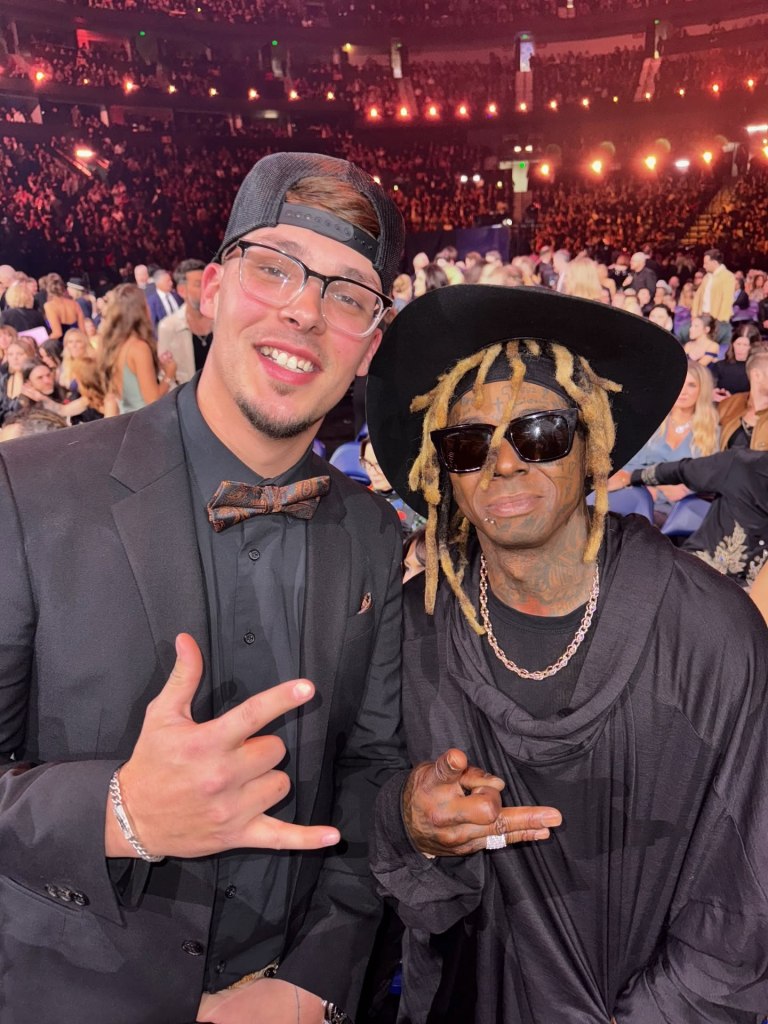
Some weekends just hit different. Some trips remind you exactly why you do what you do, why you get up before dawn, why you chase these crazy radio dreams, why you fight for artists, and why you believe in music the way you do. This CMA weekend was one of those trips for me—and I want to start it the same way it started: with gratitude.
Thank You, Contour Airlines – My Favorite Way to Fly
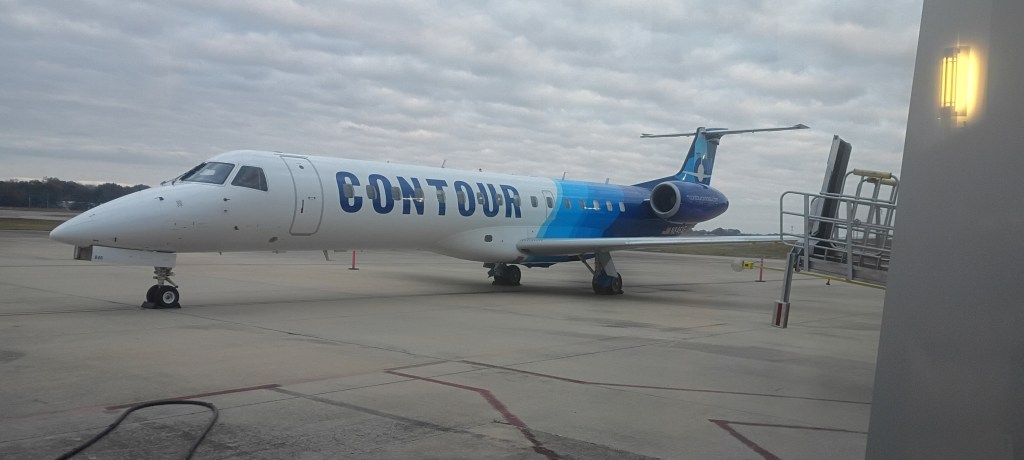
First off, huge thanks to Contour Airlines. Flying from Tupelo to Nashville on a small plane is one of my absolute favorite parts of these broadcast weekends. The flights both ways were smooth, comfortable, and flat-out enjoyable. There’s just something about those smaller jets that feels personal—like they’re rooting for you to have a good weekend.
Placemakr Hotel – Our Home Base in Nashville
Next up, Placemakr Hotel. Let me tell you… they did not have to go that hard, but they absolutely did. They put us up in a beautiful two-room suite, clean, quiet, and right where we needed to be. The kind of place you walk into and immediately think, “Oh yeah… we’re gonna be alright this weekend.”
Gone Country Hat Company – Keeping Me Styled & Profiled
A massive thank you to Gone Country Hat Company for keeping me looking sharper than I had any business looking. I walked into the CMAs styling and profiling, and I heard about that hat all weekend. It’s amazing what a great hat will do for your confidence—and your photo ops.
BMG, Brantley Gilbert & a Pre-Party to Remember
Speaking of big moments… thank you to BMG and Brantley Gilbert for having us at their CMA pre-party. From the moment we walked in, it felt like home. Great people, great music, and Brantley was as genuine and welcoming as they come. Those are the nights you remember.
Sharla McCoy, Belmont University & 33 Years of Broadcast Magic
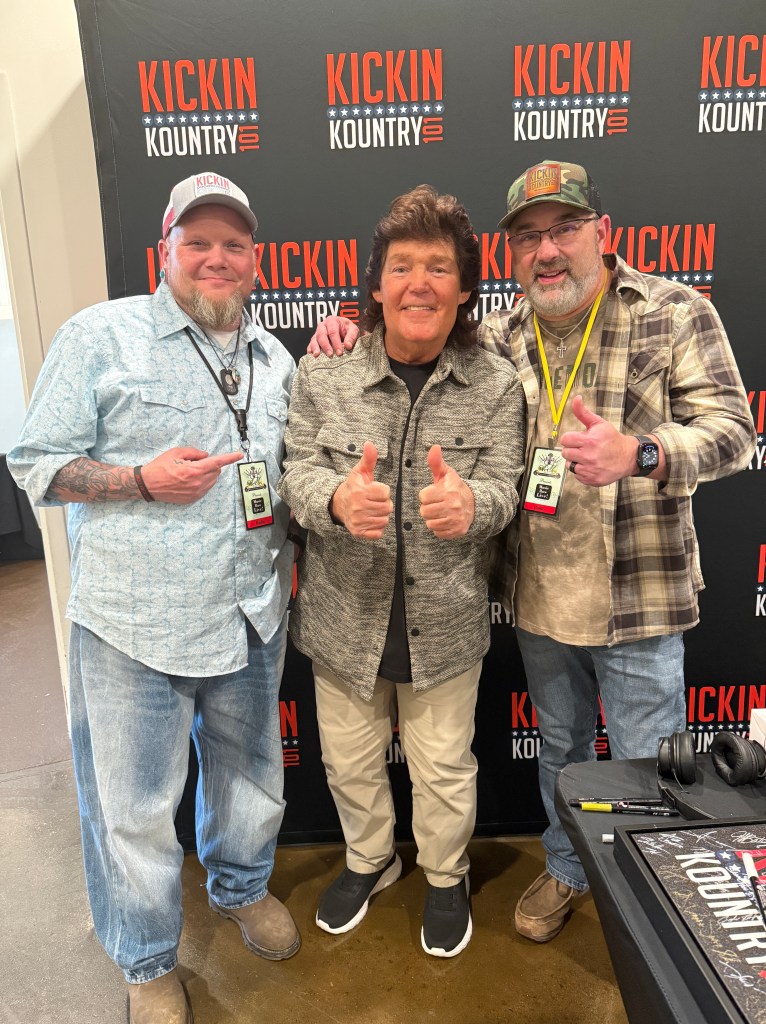
I want to take a second to thank Mrs. Sharla McCoy and the entire crew at Belmont Chapel for putting on Sharla McCoy’s 33rd Annual Live from Music Row Broadcast.
What an honor to be part of that legacy. What a privilege to be one of the stations invited. What a blessing to be surrounded by people who truly love this industry.
From the setup crew to the chapel staff to our wrangler Ms. Hailey, everyone was incredible. The way they kept things flowing smoothly—especially during those hectic morning hours—deserves a standing ovation.
Artists, Interviews & Incredible Moments
To every single artist who took time to stop, sign, talk, laugh, and record liners with us—thank you. That kind of kindness sticks with you.
Some of the highlights for me:
Randy Travis – a moment I’ll carry with me forever.
Bernie Leadon of the Eagles – meeting him was monumental. A true bucket-list moment in my career.
Mitchell Tenpenny – always a good hang.
Brantley Gilbert, again—solid dude, every time.
HARDY – a writer’s writer and one of the sharpest dudes in the business.
Cody Johnson – the real deal, no explanation needed.
Shane Profitt, Hudson Westbrook, and so many more who came through with great energy.
Bailey Zimmerman singing Tesla with me—because that’s his favorite hair band and he just rolled right into it. Those are the moments you can’t plan, can’t script, and can’t forget.
The Birth of Stray Dog Entertainment
One of the biggest, most unexpected blessings of the entire weekend came from the conversations happening between the big moments.
I want to give a special thank-you to Robert Allsup, who set up some incredible meetings for me throughout the trip. Those conversations opened doors I didn’t even know were waiting for me. Robert has a gift for connecting people who need to be in the same room, and he proved that again and again this past week.
But beyond the meetings, it was the heart-to-heart talks with artists—the real talk—about what they truly want from a label, what they’re tired of dealing with, and what they wish the industry would finally get right.
And somewhere in those conversations… somewhere between the frustration, the hope, and the dreams we all share…
Stray Dog Entertainment was born.
A label built on honesty. A label built on fairness. A label built for the artists who actually give a damn.
It wasn’t planned. It wasn’t drafted months ago. It wasn’t something I walked in expecting to launch. It came from the energy of the weekend. It came from the people. It came from the realization that we can do better—and we will.
The Food (Because Radio Runs on Protein & Coffee)
Let me talk about the food for a second…
Outback Steakhouse
They supplied the meals for the broadcast, and buddy… they brought the heat.
Burgers 🔥
Chicken 🔥
Protein bowls 🔥🔥
Everything was on point.
Breakfast was handled by the chapel staff, and when I say cathead biscuits, I mean CATHEAD BISCUITS. Soft, huge, buttery, heavenly—everything a Southern boy needs at 6 AM.
And the best part?
They kept the coffee flowing 24/7. If you know radio people, you know that’s not just thoughtful—that’s life support.
Radio Folks: The Good, the Great & the… Well…
I also met a ton of my fellow radio family.
Some were genuinely wonderful people—like Ms. Sarah Lee, who is honestly a treasure and made my morning so much better just being around her.
And then… well… there was the other kind.
There’s always that one guy, right? Big, bearded, bald-headed, tall, loud, and apparently allergic to patience or manners.
Cut in front of me twice. Lied three times. Acted like he owned the place.
And yes, I told him exactly what I thought of it—and no, I don’t regret it. You act like a dickhole, you get treated like a dickhole. I’m not the type to play pretend, and if he’d shoved past me one more time I might’ve slapped the beard clean off his face.
But hey—99% of the people there were absolute gems. And I’m grateful for every single real one I met.
Gratitude to the Labels
Big thanks to everyone from Triple Tigers, BMG, and all the label folks who showed up, shook hands, shared stories, and made us feel welcome. These are the relationships that keep our little corner of the music world alive.
Final Thoughts
This weekend reminded me why I do radio. Why I get on those small planes. Why I put in the hours no one sees. Why I chase good music, real artists, and genuine connections.
It was a weekend of memories, laughter, music, early mornings, late nights, great people, great food, the birth of Stray Dog Entertainment, and moments I’ll be talking about for years.
To everyone who made it possible—thank you. To everyone I met—much love. And to Nashville—until next time.
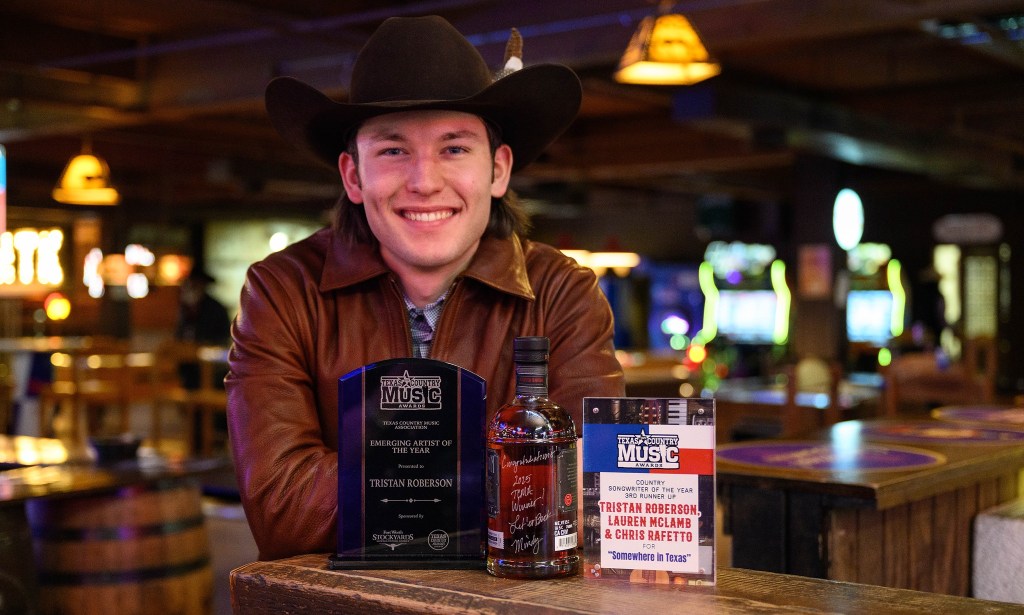
At just eighteen, Tristan Roberson is already living the kind of whirlwind most artists don’t experience until the back half of their careers. With 11.7+ million streams across all platforms, more than 331,000 social media followers, and a rapidly growing presence on Texas radio, he’s become one of the most talked-about young names in modern country music.
But when you meet him, the first thing you notice isn’t the stats — it’s the energy. A spark. A grin. A kid who genuinely just wants to make somebody’s day better.
“I’m just a ball of energy,” he laughs. “I’m here to entertain. I’m here for the people.”
And the people are showing up.
A Career That Launched Like a Rocket
Tristan’s early story sounds almost mythical now. At nine years old, he learned those classic beginner riffs on guitar — “Smoke on the Water,” “Wonderwall” — before putting the instrument down and moving into voice and piano training. At fifteen, he picked the guitar back up, and everything changed.
A friend encouraged him to post videos on TikTok. He struck a deal with his parents:
“Let me have social media, and I’ll post every day.”
They agreed. He posted. And those posts turned into a movement.
Soon, Tristan wasn’t just going viral — he was becoming one of the youngest breakout artists in Texas. But still a teen he says about his off time “I love to play poker. I am a poker player. I play video games. All kinds of stuff.”
A refreshing change was when I asked him what was on his playlist right now he responded “Oh man the classic stuff, Keith Whitley, Ronnie Milsap, Merle Haggard, George Jones….”
A Year of Firsts: Chart Success, Awards & Industry Buzz
2025 wasn’t just a good year for Tristan. It was historic.
💿 Debut Album: One Night in Dallas
Released May 9, 2025, the record delivered massive global chart success:
#1 — Spain
#2 — Italy
#4 — Costa Rica
📻 Two Consecutive #1 Texas Country Radio Singles
“Somewhere in Texas” — #1 on May 8, 2025
“One Night in Dallas” — #1 on September 4, 2025
🎧 Major Spotify Playlist Support
All New Country Music
Fresh Finds Country
Next from Nashville
Texas Country Now
These placements are the kind of support most artists twice his age are still chasing.
🏆 Texas Songwriter Recognition
2024 Texas State Songwriter Championships – 1st Runner-Up
Top Radio Pick of the Year
🌎 International Chart Impact
Tristan’s music hit Top 6 iTunes Country Charts around the world:
“Hearts Don’t” — #3 Spain, #4 Mexico
“Rough Spot” — #6 Spain
“Somewhere in Texas” — #2 Mexico
“The Reaper Keeps Creepin’” — #2 Brazil
These aren’t small markets — these are major global wins for a young independent artist.
Back-to-Back Award Wins
🏛️ November 2, 2025 — The Josie Music Awards (Grand Ole Opry)
The largest independent music awards show on Earth recognized Tristan with four nominations:
Artist of the Year
Vocalist of the Year
Song of the Year
Fans Choice
He walked away with: 🏆 Artist of the Year (Under 18)
Winning at the Grand Ole Opry at eighteen? Unreal. “That was great. I mean no words can really describe how that moment felt.”
⭐ November 9, 2025 — Texas Country Music Awards
Two nominations. Two wins:
Emerging Artist of the Year
3rd Runner-Up — Songwriter of the Year (“Somewhere in Texas”)
In nine days, Tristan accomplished what most artists hope to pull off in a decade. Even with the back to back #1 singles in Texas, Tristan said it still came as a shock to hear his name. “I really didn’t think it was gonna be a given, so I was still surprised and honored just be nominated even!”
A Performer With Real Draw — and Real Heart
This year alone, Tristan has:
Sold out three venues on his One Night in Dallas Tour
Headlined Frisco Freedom Fest for 25,000 people
Opened for Texas icons Josh Ward, William Beckmann & Aaron Watson
Delivered a featured performance for the Governor of Texas
Appeared on Good Morning Texas (2025) and Texas Today (2024)
Named Country Now “Country Next Artist to Watch — June 2025”
He also secured a high-profile endorsement with Twinstone Hats, designing his own signature cowboy hat: “The Dallas.”
When asked about school life still Tristan said “The kids at my school really don’t see it as a big deal haha. I mean I have been with most of them since 5th grade, so there like “oh thats just Tristian” and it’s no big deal.”
Behind the scenes, his mother — who also serves as his manager — remains his anchor and biggest supporter. “I know she always has my back and my best interests at heart.”
What’s Coming Next
🎅 New Christmas Single
His original holiday track “Santa Drove My Bronco” drops November 14 across all digital platforms and Texas Radio.
Even more impressive: the single is launching alongside a children’s book Tristan wrote — available in both hardback and digital formats this December.
💿 Sophomore Album — Spring 2026
Tristan has already begun work on his next album, a project poised to elevate his sound even further and solidify his position among the next wave of country stars.
His dreams are big — stadium tours, chart-topping records, a career modeled after Parker McCollum — but at his current pace, none of it feels out of reach. Make sure to tune into Kickin Kountry 101 to hear Tristan and check out the Doc and Friends Podcast to hear the replay of his interview!
📲 Follow Tristan Roberson
Stay connected with one of country music’s fastest-rising young artists:
By Michael “Doc” Studard | Kickin Kountry 101 – Indie Spotlight
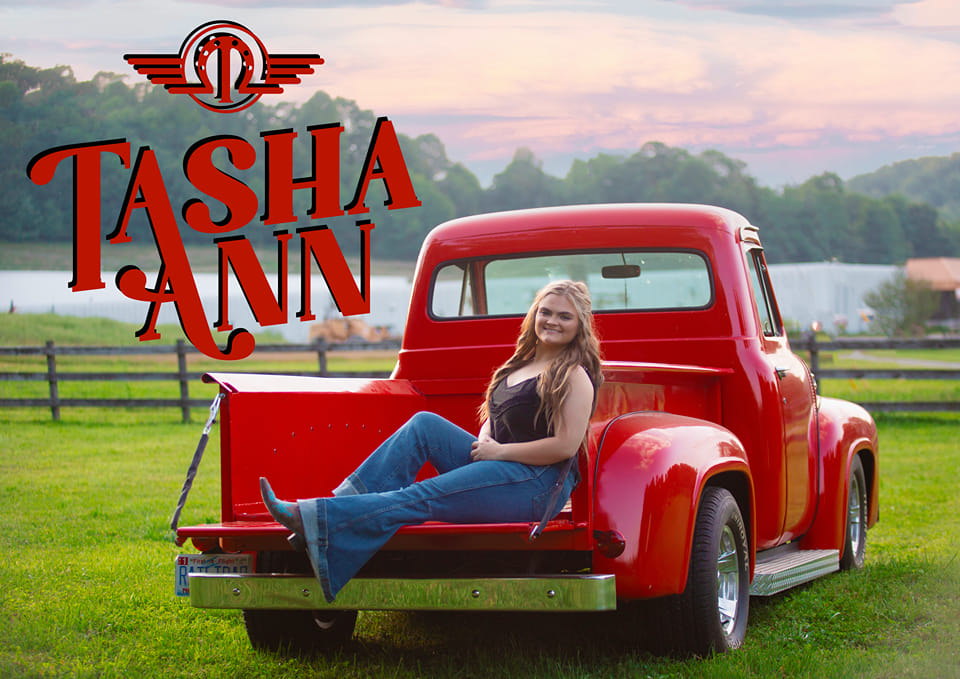
Eighteen-year-old singer Tasha Ann has the kind of voice that stops you mid-conversation. It’s seasoned, soulful, and steady—something you expect from someone twice her age. Yet, when she laughs, it’s pure youth—bright, quick, and still a little surprised by how fast her life is changing.
Rooted in Faith, Growing in Country
Like so many Southern singers before her, Tasha Ann’s story starts in church. Her mother was a worship leader, and those early Sundays set her foundation. “I didn’t really grow up listening to country music,” she tells me, “I always listened to Christian because that’s what Mom played. But one day I thought—let’s try country—and I loved it.”
Faith never left her; it simply expanded its borders. “I pray before every show,” she says. “I always think about the songs first. I ask myself, is this a good song to sing?” She may perform everything from Miranda Lambert to The Climb, but even her covers are filtered through conviction and connection. “The Lord can move wherever,” she smiles. “That’s how I see it.”
A God-Thing Connection and a Growing Career
Every artist needs that one believer who sees their spark. For Tasha Ann, it was Dale—a guitarist who, by what she calls “a God-thing,” stepped into her path. “My mom knew him from church,” she recalls. “He just called one day and said, ‘Can I play for your daughter?’ and that’s how it started.”
From that first Fourth-of-July food-truck gig to writing sessions and regular shows, Dale became her right-hand man and mentor. “When Dale came along, everything made sense,” she says. “He pushed me to take it seriously.” Together they began booking, recording, and dreaming bigger.
Beyond the Stage: The Heart of Who She Is
When she’s not singing, Tasha Ann can be found working at an assisted-living facility—a job she cherishes. “It’s not glamorous,” she says, “but it’s special.” For someone chasing a music career, that choice speaks volumes. It’s not about spotlight—it’s about service. “The residents remind me what really matters,” she adds.
And when she’s off the clock? She’s still performing—just in pointe shoes instead of boots. “I’ve been dancing since I was four,” she says, eyes lighting up. This year she’s part of a full production of The Nutcracker. “It’s a big deal, and I’m so excited. Between that, music, and work… sleep doesn’t happen much.” She laughs. “At my age, I can live on Red Bull.”
The Sound and the Soul
Ask about influences, and her list paints the perfect map of her sound: Ella Langley, Lainey Wilson, Erin Kirby, and Miranda Lambert. “Ella’s just so cool,” she says. “And Erin Kirby’s music has really impacted me.”
That fusion shows up on stage, where Tasha Ann can flip from heartfelt worship to the raw joy of crowd favorites. One of her favorite moments came recently at Big Al’s. “We started ‘Fishin’ in the Dark,’ and I didn’t know if people would care—but they loved it,” she grins. “Everyone was singing, dancing, and when I held the mic out, they sang right back. That energy… it was amazing.”
Looking Ahead
Her goals are as grounded as they are grand: keep recording, keep performing, and one day—stand beneath the circle of lights at the Grand Ole Opry. She and Dale already have “four or five songs” slated for release starting right after Christmas, each spaced a couple of months apart. Between those, she’ll keep performing both acoustic and full-band shows. “Acoustic feels freer,” she says, “but with the full band, it’s electric.”
And when I ask what she’d tell another young artist just starting out, she answers without hesitation:
“Don’t give up. Follow your heart, not the crowd. Do what you’re called to do—and stop listening to people who say you can’t.”
A Voice Beyond Her Years
Tasha Ann may be young, but she sings with the weathered wisdom of someone who’s lived a few lifetimes. Maybe that’s because she’s already learned to balance them—faith and fun, work and art, humility and ambition.
At 18, she’s proof that heart still matters in country music—that kindness, conviction, and a little caffeine can take you a long way.
By Michael “Doc” Studard – Kickin Kountry 101 / The Local Voice
Kickin Kountry Indie Spotlight Artist Interviews: Launch Edition
We’re kicking off a brand-new feature here on Kickin Kountry 101 — the Indie Spotlight Artist Interviews, hosted by Doc from Mornings with Doc. This ongoing series shines a light on rising independent country artists from across the map — the voices carving their own path and keeping real country alive. First outta the shoot is Oklahoma’s own Chris Kizzia — a hard-working, small-town artist whose blend of throwback country heart and Southern-rock grit is making waves on the MusicRow charts. Doc caught up with Chris to talk about his roots, his songwriting, and his wild Nashville stories.
If you want to understand what makes Chris Kizzia tick, picture the glow of a backyard bonfire in Fort Gibson, Oklahoma — a small-town night filled with guitars, smoke, and laughter. That’s where the Oklahoma native first learned that songs are built as much from dirt and sweat as from melody.
“We didn’t have much to do growing up,” Kizzia laughs. “We’d make our own fun — sit around, build fires, listen to music, blow stuff up. Just redneck stuff. That was life.”ChrisKInterview
The Working-Man Foundation
Kizzia’s hands were calloused long before they ever gripped a microphone. The son of a home-builder, he spent years framing houses under the watchful eye of a father determined to teach more than blueprints.
“Dad made sure I worked the hardest jobs,” he says. “He told me, ‘I’m gonna work you so hard you won’t want to do this forever — but you’ll learn what real work feels like.’ ”ChrisKInterview
That work ethic still drives him, whether he’s behind a hammer or a guitar. Construction, audio-video gigs, even church music — every job, he says, taught him discipline. “Music’s work, too,” he adds, “but it’s the kind that feeds you.”
A Legacy in His Blood
Music wasn’t optional in the Kizzia household. His grandparents nudged him onto a church stage as a kid, and his grandfather — a country artist and radio DJ — became his model.
“They’d tell me I was always singing, so they got me up in front of people,” Kizzia recalls. “My grandpa was even in that old movie Country on Broadway with George Jones. I found it online recently and was like, ‘There he is!’ It’s just kind of been in my blood.”ChrisKInterview
Finding His Sound
Raised on Ronnie Milsap and Sunday hymns, Kizzia’s style blends classic throwback vocals with the grit of Southern rock.
“I grew up on country, but when I heard those guitars — Skynyrd, Aldean — I dove in,” he says. “I love that edge. My music just ends up a mix of both.”ChrisKInterview
The storytelling tradition matters most to him. “I start with a title or a line,” he explains. “‘I Hate It That I Love You’ came from that idea of being hooked on someone like it’s a bad habit. Good songs tell stories — like The Dance,In Color, or Colder Weather. Those songs get you.”ChrisKInterview
Heart Over Hardware
When talk turns to artificial intelligence in music, Kizzia doesn’t mince words.
“I hate it,” he admits. “You can’t fake heart. AI might make cookie-cutter stuff, but it’ll never write The Dance. That’s God-given.”ChrisKInterview
He’s fine with technology as a studio tool — not as a substitute for soul. “Nothing compares to a person with a pen,” he adds.
Balancing Family and the Road
Between recording sessions in Nashville and home life in Broken Arrow, Kizzia’s balancing act is pure working-dad reality.
“I’ve got three girls,” he says, grinning. “When I’m home, I’m present. We FaceTime every day. They’re old enough now to understand why Dad’s gone — and they’re still proud. I haven’t hit the dorky-dad phase yet.”ChrisKInterview
Defining ‘Real Country’
Ask him what real country means, and he’ll pause.
“People argue about sounds — 90s vs 60s — but to me it’s a lifestyle,” he says. “It’s who you are when the song’s over. Are you real or pretending? I’m just a small-town guy who hunts, fishes, and works hard. That’s country.”ChrisKInterview
Turnin’ the Night On
That authenticity is paying off. His debut single, “Turn the Night On,” cracked the MusicRow charts at #29 — a feat for an indie newcomer. The song, penned by hitmakers Ashley Gorley and Rhett Akins, found its way to Kizzia through his manager.
“It was sitting there, uncut,” he says. “We needed something to come out strong, and that one just fit.”ChrisKInterview
With more than 50,000 Spotify streams and counting, Kizzia jokes, “That’s enough to buy a Big Mac.” Then he turns serious: “Streaming’s great for exposure, not for income. Where you make your money now is shows and merch. But that’s okay — it keeps you connected to people.”ChrisKInterview
Next Up in Nashville
In Nashville, he’s cutting a six-song project with Grammy-nominated producer Jeff Huskins of BMG Music — the same Huskins who’s worked with Clint Black and Little Texas.
“It’s wild,” Kizzia says. “I got this random email: ‘Jeff Huskins wants to work with you.’ I thought it was a scam! But it’s real. His band tracked six songs in one day — it was nuts. We’re hoping to release early next year.”ChrisKInterview
The White Castle Epilogue
Before wrapping up, Kizzia shares one last Nashville story that seals his down-to-earth charm. After a late night of recording a few years back, he and some buddies celebrated by hitting the legendary White Castle downtown.
“We turned one on that night,” he laughs, “and thought, ‘Let’s grab some White Castle.’ Bad idea. It didn’t settle well.”ChrisKInterview
That moment — a chart-climbing artist still laughing about a greasy burger run gone wrong — says everything about who Chris Kizzia is. A working man with a guitar, a storyteller with calloused hands, and an artist who still knows how to laugh at himself.
“Dad taught me to work hard, Grandpa taught me to sing, and my girls remind me why I do it,” he says. “That’s country. That’s real.”ChrisKInterview
Hey y’all — Doc here from Mornings with Doc on Kickin Kountry 101.
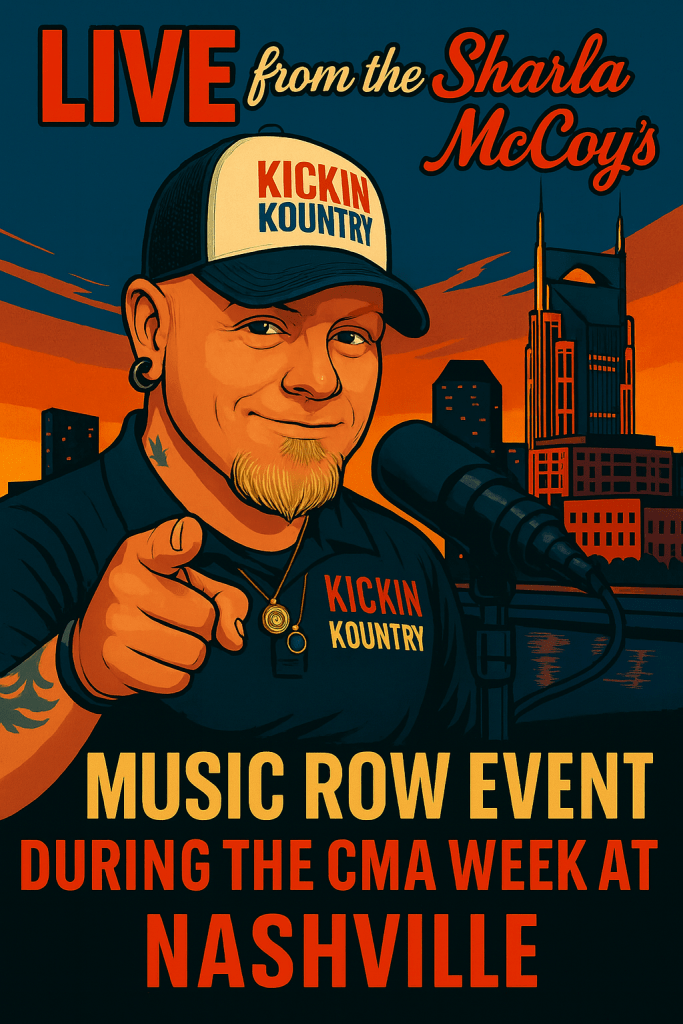
This November, I’ll be heading to Nashville for the CMA Music Row Live Press Junket, where I’ll be broadcasting live right from the heart of country music. It’s one of the biggest opportunities of the year — we’ll be sitting down with artists, songwriters, and legends from across the country scene, bringing all that energy straight back home to Mississippi.
Now, here’s where you can be part of it. I’m opening up a handful of sponsorship spots for businesses, artists, or bands who want their name heard live from Nashville.
For just $100, you’ll get: 🎤 Two to three on-air mentions each day while we’re broadcasting live from the CMAs. 🎧 A name drop or segment shoutout like —
“This segment of Mornings with Doc, live from the CMAs, is brought to you by Billy Bob’s Laundromat — where your jeans come out cleaner than your conscience.”
And when we get back to the studio, I’ll keep spreading the love with an on-air thank-you to all our trip sponsors.
All funds go directly toward lodging, gas, and food while we’re in Nashville. I’m not trying to fund a vacation — just covering the basics so I can represent Kickin Kountry 101 and our Mississippi crew the right way.
If you’re an artist, band, local business, or just someone who wants to help an independent station make some noise in Nashville, this is your chance to be part of the story.
Want to help but don’t need a shoutout? You can donate any amount and still be part of making this trip happen. Every bit counts and means a lot.
Let’s show Nashville that Kickin Kountry and the Midsouth can hang with the big boys — one name drop at a time.















 Mornings With Doc